 EN
EN

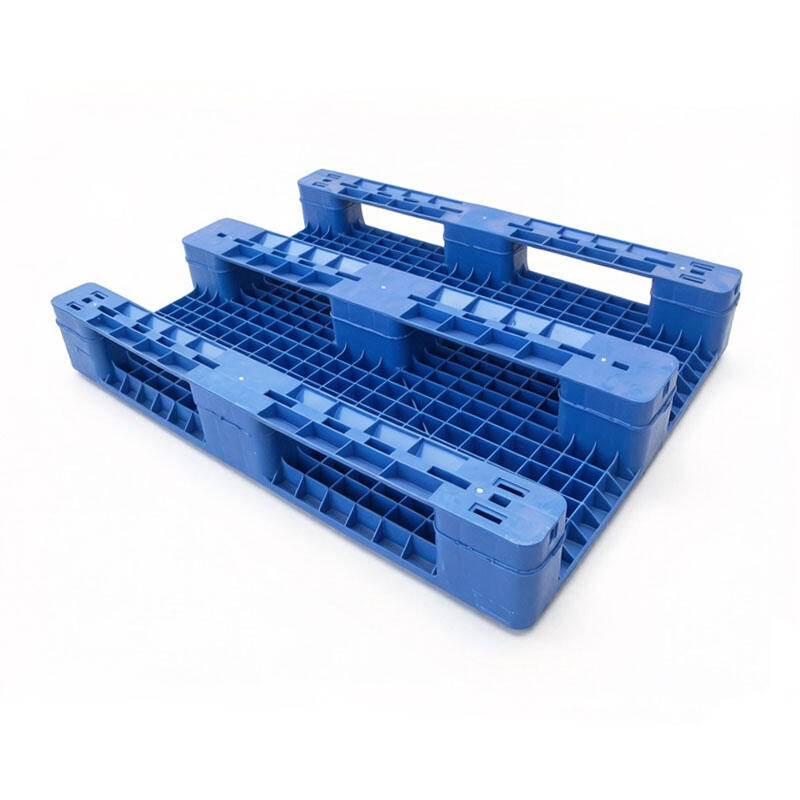
For logistics operators, warehouse managers, manufacturers, and procurement teams, buying plastic pallets is not just about comparing dimensions and price. The right pallet affects storage safety, transport efficiency, rack compatibility, product protection, and long-term operating cost.
A well-selected plastic pallet can improve handling stability, reduce damage, optimize warehouse space, and support more efficient movement across supply chains. But a poor selection can create problems in rack systems, reduce service life, and increase safety risks during storage and transport.
This guide explains what B2B buyers should evaluate when selecting plastic pallets, with a focus on material, load capacity, rack safety, and supplier capability.
1. Start with the Real Application Scenario
The first step in choosing a plastic pallet is understanding where and how it will be used. Plastic pallets are widely applied across warehousing, logistics transportation, food and beverage, chemical, pharmaceutical, automotive manufacturing, electronics, cold storage, export packaging, and automated warehouse systems.
Each scenario places different demands on the pallet. A pallet used in a cold storage facility may need better low-temperature performance. A pallet used in food or pharmaceutical handling may require easier cleaning and cleaner material control. A pallet used in automated warehousing or three-dimensional storage may need better dimensional consistency and stronger rack compatibility.
Before choosing a pallet, buyers should confirm:
- Industry application
- Product weight and load type
- Static, dynamic, and rack storage conditions
- Handling method
- Temperature environment
- Hygiene or anti-static requirements
- Need for standardized sizing and automation compatibility
A clear usage scenario is the foundation of correct pallet selection.
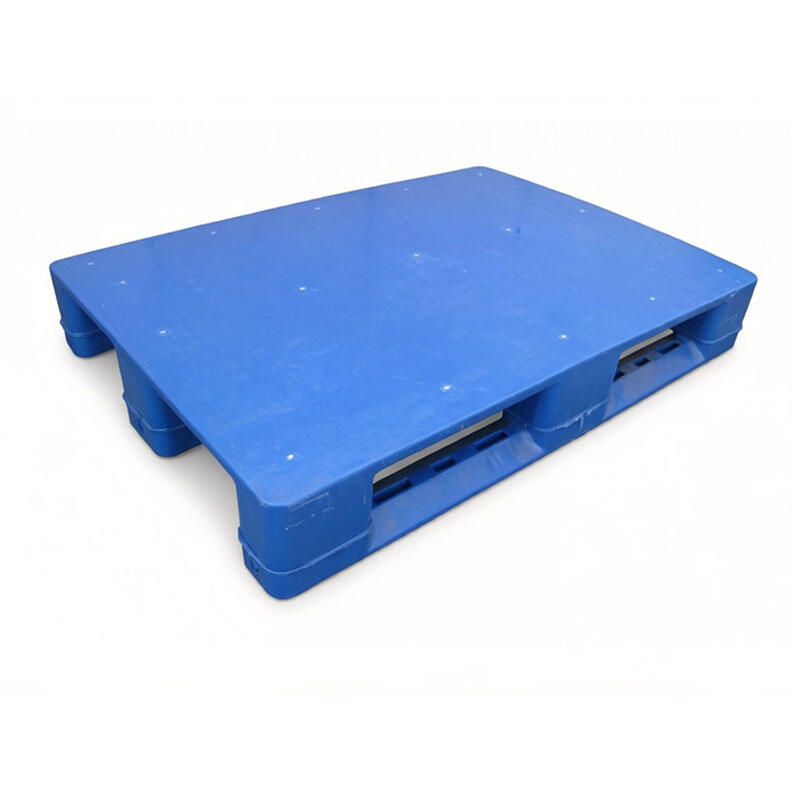
2. Understand Plastic Pallet Material Selection
Material is one of the most important factors in pallet performance. On Huadu’s website, the company highlights its expertise in warehousing and logistics plastic products and its large-scale injection molding capability. In the broader product range on the site, materials such as HDPE and PP are also referenced for logistics containers, which reflects the company’s familiarity with industrial plastic product design and application.
For B2B buyers, material selection influences:
- Impact resistance
- Low-temperature performance
- Corrosion resistance
- Cleanability
- Structural rigidity
- Long-term durability
A pallet used in cold chain or export logistics may face very different working conditions from one used in a dry warehouse or internal factory movement. This is why buyers should not treat all plastic pallets as equivalent. Material choice should match the real operating environment and expected service cycle.
3. Load Capacity Should Be Evaluated Correctly
One of the most common pallet sourcing mistakes is focusing only on nominal weight without understanding how the load is applied. In real warehouse and transport use, pallet performance depends on more than just the total cargo weight.
B2B buyers should consider:
- Static load
- Dynamic load
- Rack load
- Load distribution
- Whether the load is centered or uneven
- Whether the pallet is moved by forklift, pallet jack, or automated system
These factors matter because the same pallet may perform very differently on the floor, in motion, or in a rack system. A pallet that is acceptable for floor storage may not be safe for rack use. A pallet that performs well under evenly distributed cargo may behave differently under concentrated loading.
The right way to evaluate load capacity is to match the pallet to the real working condition rather than relying only on a single load figure.
4. Rack Safety Is a Major B2B Decision Factor
Rack safety is one of the most important issues in plastic pallet selection, especially for warehouses using shelving systems, high-bay storage, or three-dimensional warehouse solutions.
Huadu’s website specifically highlights that standardized pallet dimensions are compatible with various shelves and can support neat stacking and three-dimensional storage, improving warehouse space utilization. This is highly relevant for B2B buyers because rack use requires dimensional consistency, stable structure, and confidence under supported loading conditions.
When selecting a pallet for rack storage, buyers should review:
- Whether the pallet is designed for rack use
- Whether the dimensions match the shelf structure
- Whether the load will be evenly distributed
- Whether the rack span and support points are appropriate
- Whether the pallet needs reinforced design for storage safety
Rack safety should never be assumed. It should be confirmed based on the specific storage system and actual loading pattern. For warehouse operators, this is one of the most important areas to verify before bulk purchasing.
5. Standardization Improves Storage and Automation Efficiency
Standardized pallet dimensions are important not only for transport but also for warehouse planning and system efficiency. On Huadu’s site, standardized design is presented as an advantage for stacking, shelf compatibility, and three-dimensional storage.
For buyers using modern logistics systems, standardized pallets can improve:
- Storage density
- Handling efficiency
- Compatibility with racking systems
- Automation alignment
- Inventory management
- Operational consistency across locations
This is especially important in logistics hubs, export-oriented warehouses, and facilities where pallets need to move smoothly between transport, storage, and internal handling systems.
6. Special Functional Requirements Should Be Considered Early
Plastic pallets are not used only in standard warehouse environments. Huadu’s website also highlights special product features such as corrosion resistance, low-temperature resistance, easy cleaning, anti-static performance, and support for RFID or QR-code-based intelligent management.
These features matter because many industries have application-specific requirements.
Examples include:
- Food and beverage operations needing cleaner and easier-to-maintain pallets
- Pharmaceutical or electronics sectors requiring more controlled handling conditions
- Cold chain logistics requiring low-temperature resistance
- Automated systems benefiting from standardization and intelligent traceability
- Precision goods transport requiring anti-static or conductive solutions
For B2B buyers, these functional requirements should be discussed early in the purchasing process rather than added later as special exceptions.
7. Supplier Manufacturing Capability Matters
A plastic pallet is a functional industrial product, so supplier capability matters as much as product specification. Huadu’s website shows strong manufacturing indicators, including more than50 large-scale injection molding machines, CNC machining centers, automatic pallet welding machines, annual production capacity of over20,000 tons, and nearly1,000 product specifications.
For B2B buyers, these points are important because they suggest stronger capability in:
- Production scale
- Custom development
- Stable repeat supply
- Specification coverage
- Response speed for large orders
- Manufacturing consistency
The site also states that the company has over20 years of product design experience and can provide customized plastic product solutions for logistics applications. For procurement teams, this means the supplier may be more capable of supporting project-specific pallet needs rather than only standard stock items.
8. Customization Can Be Valuable for Industrial Buyers
In many warehouse and logistics projects, standard pallets are not always enough. Different industries may require specific dimensions, structural features, functional properties, or identification options.
Huadu highlights its ability to provide customized logistics plastic products according to customer requirements, including product specifications, functional features, appearance design, and application scenarios. This is useful for buyers that need pallets tailored to:
- Non-standard storage systems
- Specialized product dimensions
- Export packaging requirements
- Industry-specific handling conditions
- Branding or traceability needs
For industrial users, customization is valuable when it improves compatibility, reduces handling problems, or supports more efficient warehouse operation.
9. Certifications and Quality Systems Support Procurement Confidence
For B2B purchasing, product quality is not only about design but also about the reliability of the manufacturing system. Huadu states that its products are certified under three management systems: quality, environment, and occupational health and safety. The company also emphasizes end-to-end quality control covering raw material selection, production processing, and pre-shipment inspection.
For buyers, this matters because a stronger quality system can help improve:
- Batch consistency
- Supply reliability
- Product traceability
- Procurement confidence
- Long-term cooperation potential
This is especially important for customers purchasing pallets at scale for multi-site operations, export distribution, or industrial systems that depend on stable product performance.
10. Build a Better Plastic Pallet Procurement Checklist
A stronger procurement process starts with a better evaluation framework. Before placing a large order, B2B buyers should confirm:
- Material suitability
- Static, dynamic, and rack load requirements
- Rack safety compatibility
- Dimension standardization needs
- Environmental requirements
- Functional requirements such as anti-static or low-temperature performance
- Supplier manufacturing scale
- Quality system and certifications
- Customization capability
- Long-term supply reliability
For buyers comparing broader warehouse and logistics solutions, our plastic pallets category page provides more information about Huadu’s pallet product range for industrial applications.
Conclusion
Buying the right plastic pallet requires more than selecting a size and checking a price. Material, load capacity, rack safety, standardization, and supplier capability all play a critical role in long-term warehouse and logistics performance.
For B2B buyers, a well-matched pallet can improve storage efficiency, reduce damage risk, and support safer, more reliable operations across different industries. A more structured procurement process helps ensure that the selected pallet is suitable not only for current handling needs, but also for future warehousing and logistics development.
Table of Contents
- 1. Start with the Real Application Scenario
- 2. Understand Plastic Pallet Material Selection
- 3. Load Capacity Should Be Evaluated Correctly
- 4. Rack Safety Is a Major B2B Decision Factor
- 5. Standardization Improves Storage and Automation Efficiency
- 6. Special Functional Requirements Should Be Considered Early
- 7. Supplier Manufacturing Capability Matters
- 8. Customization Can Be Valuable for Industrial Buyers
- 9. Certifications and Quality Systems Support Procurement Confidence
- 10. Build a Better Plastic Pallet Procurement Checklist
- Conclusion