 EN
EN

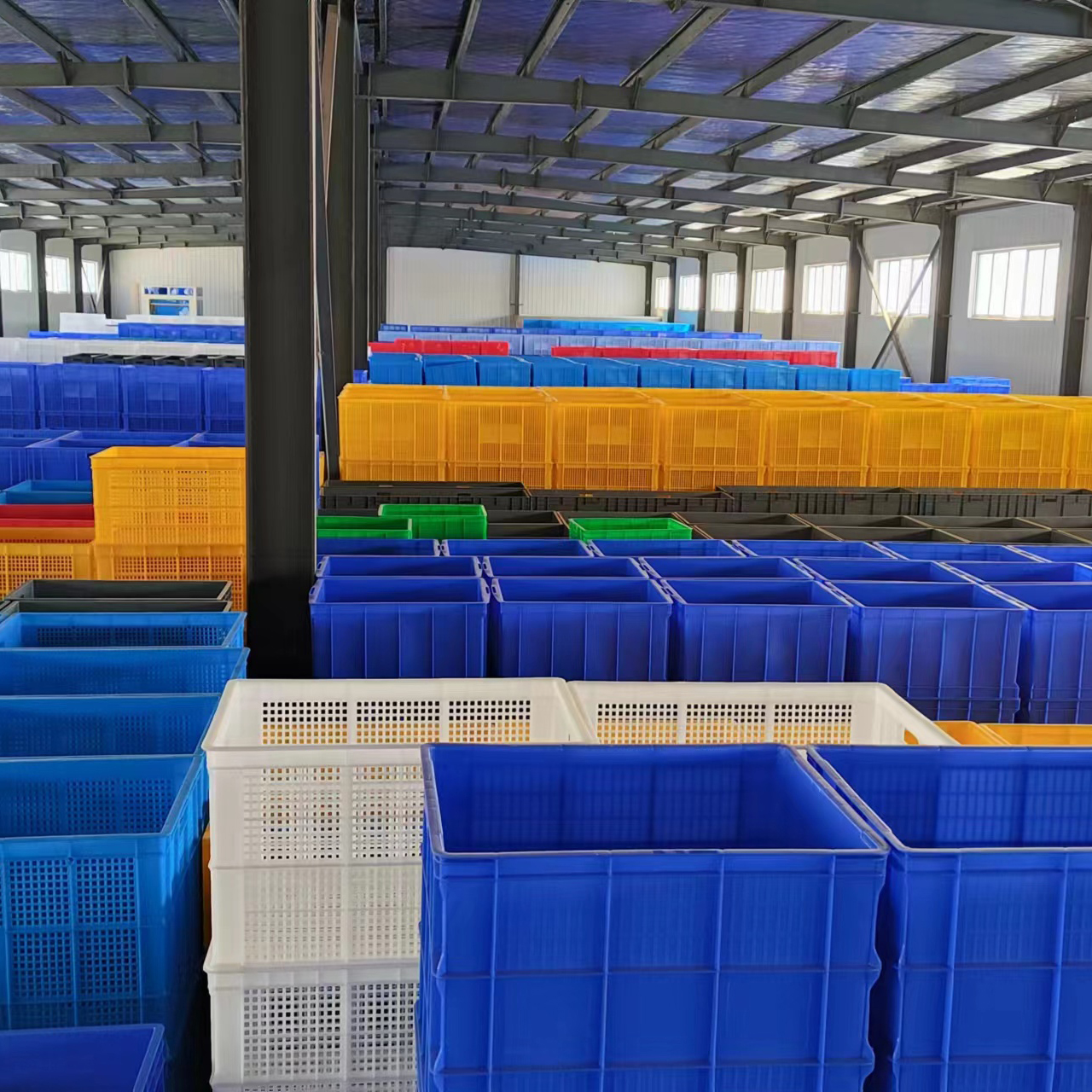
Why Stackable Crates Drive Operational Efficiency
Standardized stackable crate systems significantly reduce labor costs while improving inventory accuracy. Uniform dimensions eliminate time spent matching mismatched containers, accelerating loading and unloading workflows. Clear labeling and visible inventory organization cut search time, while consistent stacking enables reliable barcode or RFID scanning—reducing manual counting errors by 15–20% compared to non-uniform storage solutions. This directly supports accurate stock management and data-driven replenishment decisions.
Labor cost reduction and improved inventory accuracy through standardized, stackable crate systems
- Cut handling time by up to 30% through optimized ergonomics and consistent crate geometry
- Reduce counting errors by 15–20% with visible, organized storage and seamless scan integration
- Enable barcode/RFID integration for real-time, automated tracking across the supply chain
Vertical space optimization: how stackable crates reduce warehouse footprint by up to 40%
Stackable crates maximize underutilized vertical space—increasing storage density without structural changes. When configured correctly, they reduce required warehouse floor area by up to 40% versus single-layer alternatives. Crates engineered for stable, high-density stacking support safe vertical growth, lowering real estate costs and enabling scalable operations within existing facilities.
Key Technical Specifications to Evaluate in a Stackable Crate
Load capacity fundamentals: understanding dynamic vs. static ratings (ASTM D6179) for safe stacking and transport
Selecting the right stackable crate demands rigorous load capacity analysis. Static load ratings (measured when stationary) differ critically from dynamic ratings (applied during movement). Per ASTM D6179 testing, a crate rated for 1,000 lbs static load may safely hold only 250 lbs during transport—a 75% reduction. Misinterpreting these metrics risks collapse during forklift handling or transit. Always verify both ratings are clearly specified—and ensure your heaviest payload remains below the dynamic limit. For example, a crate carrying 200 lbs of automotive parts requires a minimum dynamic rating of 250 lbs to accommodate acceleration, vibration, and handling stresses.
Material durability comparison: HDPE vs. PP performance under impact, UV exposure, and repeated stacking cycles
Material choice directly impacts longevity in demanding environments. High-Density Polyethylene (HDPE) delivers superior impact resistance—absorbing 30% more shock than Polypropylene (PP) per ISTA 3A testing—making it ideal for high-impact logistics like automotive or construction. PP excels in UV stability, retaining 95% tensile strength after 2,000 hours of sunlight exposure versus HDPE’s 85%, and maintains ductility down to –20°C—critical for cold-chain applications. Both materials withstand 10,000+ stacking cycles, but HDPE’s chemical resistance makes it the preferred choice for pharmaceutical or agricultural use involving corrosive agents. Match material properties to your dominant operational hazards: impact, temperature extremes, UV exposure, or chemical contact.
Integration with Your Material Handling Infrastructure
Fork pockets, pallet-jack clearance, and nestability considerations for seamless stackable crate deployment
Successful integration hinges on three mechanical compatibility factors: fork pocket alignment, pallet-jack ground clearance, and nestability. Fork pockets must match your equipment’s tine spacing per ASTM D6031 to prevent destabilization during lifting. Under-crate clearance should be ≥3.5 inches to accommodate standard pallet jacks—insufficient height causes transport delays of up to 30% (Logistics Optimization Report 2023). Nestable designs reduce empty-crate storage volume by at least 60%, optimizing vertical space utilization. These features collectively eliminate manual repositioning, accelerate inventory rotation, and ensure cross-compatibility with automated storage and retrieval systems (AS/RS). Poorly matched specifications disrupt material flow and increase handling costs by 15–25%.
| Feature | Purpose | Optimal Specification |
|---|---|---|
| Fork Pockets | Secures lifting and stacking | ASTM D6031 compliant slots, aligned with tine spacing |
| Pallet-Jack Clearance | Enables ground-level transport | Minimum 3.5-inch under-crate height |
| Nestability | Maximizes space efficiency for return logistics | ≥60% reduced volume when stacked empty |
Industry-Specific Applications of Stackable Crates
Stackable crates deliver tailored value across sectors by solving distinct operational challenges—leveraging modularity, vertical storage, and product protection to cut costs and improve throughput.
- Automotive Manufacturing: Reinforced walls and precise dimensional consistency keep engine components organized and damage-free through robotic assembly lines and just-in-time delivery
- Pharmaceutical Distribution: FDA-compliant sanitary plastic variants ensure regulatory adherence, while nestable designs reduce return shipping costs by 30%
- Food & Beverage Logistics: Ventilated, anti-microbial crates extend produce shelf life in cold-chain transit and simplify sanitation between loads
- Retail Operations: Uniform crate sizing enables direct-to-floor shelf replenishment, cutting handling time by 25% and reducing labor dependency
These applications underscore how standardized stackable crate systems drive measurable gains—not just in space and labor, but in compliance, product integrity, and end-to-end process reliability.
FAQs
Why are stackable crates preferred in supply chain operations? Stackable crates standardize storage, improve vertical space utilization, and allow for seamless integration with inventory tracking systems like barcode and RFID scanning.
What is the difference between static and dynamic load capacity? Static load capacity measures a crate's strength when stationary, while dynamic load capacity measures the same under movement. Always select crates that can handle the dynamic load of your heaviest payload to prevent accidents during transport.
Which material is better: HDPE or PP for stackable crates? Both materials have strengths. HDPE offers superior impact and chemical resistance, while PP provides better UV stability and performance at lower temperatures. Choose based on your operational needs.
Can stackable crates be used in automated storage and retrieval systems (AS/RS)? Yes, as long as they feature proper specifications like fork pocket alignment, pallet-jack clearance, and nestability, ensuring smooth integration with AS/RS infrastructure.
Do stackable crates require specific handling equipment? Many stackable crates are designed to be compatible with standard forklifts and pallet jacks; ensure the specifications match your equipment for seamless handling.