 EN
EN

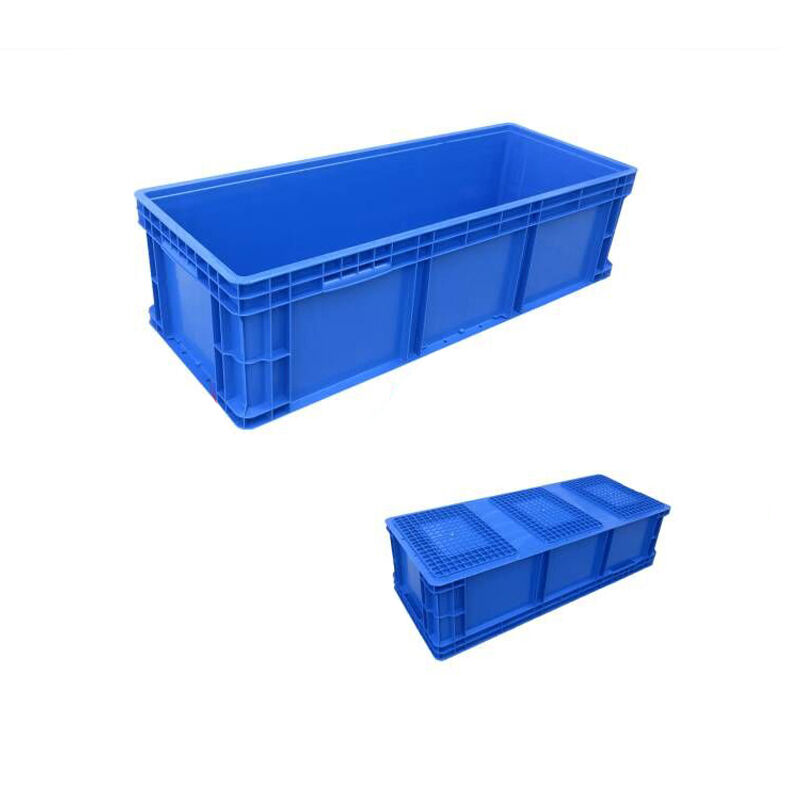
Upfront and Lifetime Cost Advantages of Plastic Boxes
Plastic Box vs. Cardboard and Wood: Initial Purchase Price Comparison
Plastic containers typically cost 20–30% more than cardboard but 40–60% less than wooden crates. While cardboard appears cheaper upfront, its single-use nature triggers repeated procurement—turning low initial cost into a recurring expense. Wood offers strength but incurs higher material and labor costs, especially for custom or reinforced builds. Plastic delivers immediate operational value through impact-resistant, moisture-proof construction that supports high stacking loads without deformation—eliminating the “hidden tax” of frequent replacement seen with disposable alternatives.
Total Cost of Ownership Over 5 Years: Depreciation, Replacement, and Maintenance
Over five years, plastic boxes deliver a clear TCO advantage:
- Depreciation: Retain 70–80% functionality versus cardboard’s full replacement every 3–6 months
- Replacement: Require no refreshes in standard environments, unlike wood (2–3 replacements in humid conditions)
- Maintenance: Cleaning costs average under $0.05 per use—far below wood’s recurring anti-fungal treatments
Durability and Longevity: How Plastic Boxes Minimize Replacement Costs
Service Life Up to 10 Years in Industrial Settings
Industrial-grade plastic boxes routinely exceed 10 years of service in demanding settings like automotive assembly lines and distribution centers. Unlike cardboard—which degrades within months—or wood, which warps and splinters under repeated stress, these containers resist impacts, moisture, chemicals, and abrasion. In logistics applications, they withstand 500+ loading cycles without structural failure. This resilience slashes replacement frequency by 60–80% compared to wood or metal alternatives, transforming packaging from a consumable into a depreciating asset—amortizing initial cost while eliminating recurring procurement overhead.
Key Performance Metrics: Impact Resistance, UV Stability, and Load Capacity
Three core engineering properties define long-term performance:
- Impact resistance (measured in joules) prevents cracking during drops or collisions
- UV stability inhibits sun-induced embrittlement in outdoor staging or transport
- Load capacity—up to 1,000 kg for reinforced HDPE designs—enables secure, high-density stacking
Field studies show these attributes collectively reduce breakage rates by 45%. High-density polyethylene (HDPE) excels across all three, maintaining integrity across extreme temperatures (–30°C to 80°C) and resisting oils, acids, and solvents. This consistency ensures reliable product protection—especially critical in regulated sectors like pharmaceuticals and automotive, where container failure risks both financial loss and compliance exposure.
Reusability and Operational Savings Across Supply Chain Cycles
Plastic Box Reuse Potential: 100+ Trips in Closed-Loop Logistics
In closed-loop systems, plastic boxes achieve 100+ round-trip cycles when maintained properly—far surpassing cardboard (1 trip) and wood (typically 10–25 trips before degradation). This reusability drives direct savings:
- Elimination of recurring packaging purchases
- Up to 60% reduction in waste disposal fees
- Lower labor input for packing, unpacking, and sorting
Asset-tracking technologies like RFID further enhance ROI by reducing loss rates and improving inventory accuracy. Crucially, plastic’s stable material cost insulates operations from raw material volatility—providing budget predictability during supply chain disruptions. Each reuse cycle defers disposal costs and extends payback—making plastic boxes foundational to lean, sustainable logistics where efficiency compounds with every trip.
Secondary Cost Avoidance: Space Efficiency and Environmental Protection
Stacking, Nesting, and Floor-Space Optimization with Standardized Plastic Boxes
Uniform dimensions enable stable vertical stacking up to eight units high and nesting of empties to just 30% of operational height. These features reduce floor-space requirements by up to 40%, directly lowering warehousing expenses—an average saving of $18/sq ft annually. A 2023 Logistics Insights study found facilities adopting standardized plastic containers reclaimed 22% of warehouse space for higher-value activities like kitting or cross-docking. Greater density also shortens travel distances for material handlers and cuts transportation trips—further amplifying labor and fuel savings.
Moisture, Pest, and Contamination Resistance Eliminating Loss and Remediation Costs
Sealed seams and non-porous polymer construction make plastic boxes inherently resistant to moisture ingress, pests, and microbial contamination—unlike cardboard (which absorbs water) or untreated wood (a known pest vector). This intrinsic protection eliminates avoidable losses:
- Product spoilage ($740k/year average, Ponemon 2023)
- Repackaging labor ($12/incident)
- Mold remediation ($45k/outbreak)
By safeguarding contents proactively—not reactively—plastic containers remove remediation, rework, and disposal line items from the total cost of ownership. For food, pharma, and electronics supply chains, this containment integrity isn’t just economical—it’s essential to quality assurance and regulatory compliance.
FAQ
What are the upfront cost differences between plastic, cardboard, and wood boxes?
Plastic boxes typically cost 20–30% more than cardboard but are 40–60% cheaper than wooden crates. While plastic has a higher initial cost compared to cardboard, its durability and reusability make it more economical in the long run.
How long do plastic boxes typically last in industrial settings?
Industrial-grade plastic boxes can last up to 10 years even in demanding environments, far outlasting cardboard (months) and wood (which can weaken due to warping, pests, and moisture).
What supply chain benefits do plastic boxes provide?
Plastic boxes offer durability, stackability, and reusability, along with lower total costs across 100+ usage cycles. They also enable space efficiency and reduce waste disposal fees and labor inputs.
How do plastic boxes contribute to space efficiency?
Standardized plastic boxes allow for high-density stacking and nesting, reducing required warehouse space by up to 40% and directly lowering associated expenses.
Are plastic boxes environmentally friendly?
Yes, their reusability eliminates frequent replacements and reduces waste. Moreover, their durability ensures long-term usability, minimizing environmental impact.